
Inside: Discover what the reverse decluttering method is and how you can use it to simplify your space this coming year.
A guest post by Evelyn Long
Most of us declutter the same way we’ve always been taught: we pull everything out, make piles, and ask ourselves—over and over—Should I keep this?
It works… eventually. But it’s also exhausting. By the end, we’re tired, overwhelmed, and often left wondering why simplifying our homes feels so hard.
What if the problem isn’t you—but the method?
As we step into a new year, there’s an opportunity to rethink how we approach our spaces. Not with more rules, bigger purges, or guilt about what we “should” own, but with a quieter, more intuitive approach that honors how we actually live.
This is where the “Reverse Decluttering” method comes in.
Instead of starting with what you want to get rid of, reverse decluttering begins with what truly supports your life right now. It shifts the focus from eliminating excess to intentionally choosing what stays and letting go of the excess.
The result is less decision fatigue and a home that feels lighter and calmer without the chaos of a full-scale cleanout.
In this post, I’ll walk you through four simple steps to practice reverse decluttering in 2026—steps designed to help you simplify your space in a way that feels realistic, compassionate, and sustainable.
Creating a home you love doesn’t have to be overwhelming. Sometimes, it just requires a different approach.
What Is the Reverse Decluttering Method?
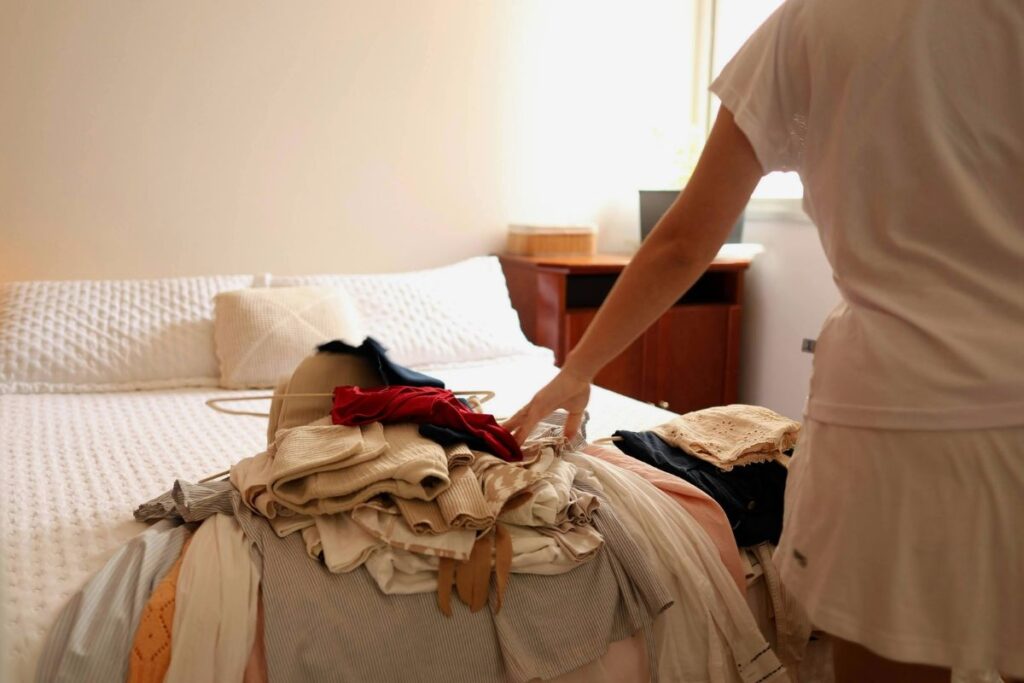
Reverse decluttering is all about changing your mindset.
Instead of asking yourself, “What do I want to get rid of?” think, “What do I want to keep?” People are naturally inclined to assign sentimental value to items, forming meaningful relationships with possessions that may hold little significance for others.
Though this emotional connection may make it challenging to let go of everything, you can harness its pull to allow yourself to focus on items that truly mean the most to you.
How to Use the Reverse Decluttering Method in Your Home
Implementing this philosophy requires a hands-on approach. The following steps will guide you through the physical process of emptying, evaluating, and intentionally curating your space one area at a time.

1. Shift Your Mindset
Consider the mugs in your cupboard. Examine how many of them came from a dishware set, how many were gifts, and how many you purchased as a souvenir.
What value do they bring, and how often do they realistically get used?
Now, imagine someone tells you to get rid of every last one of them. Which would be the hardest to part with? Allow yourself to keep those.
By shifting your mindset with decluttering, you may rediscover the value of the more sentimental items, allowing you to appreciate them even more.

2. Try the House Hushing Approach
The house-hushing method encourages you to test living with less. Empty an entire shelf, box, or corner of your home, then repopulate it only with items you deem essential, use frequently, or genuinely cherish.
If you are not quite ready to part with the nonessentials that didn’t make it back to the space, you can box up the remainders and store them out of sight for a set period. By keeping them stored, you can get used to the space without them.
Given time and separation, these items may not be as sentimental after the designated cool-off period.
It’s essential to establish a clear limit for the duration you keep boxed items. Try no more than 30 days before revisiting the box and assessing if you truly missed any of the items.
This way, you can prevent a buildup of storage boxes that merely relocate the clutter.
3. Go Room-By-Room
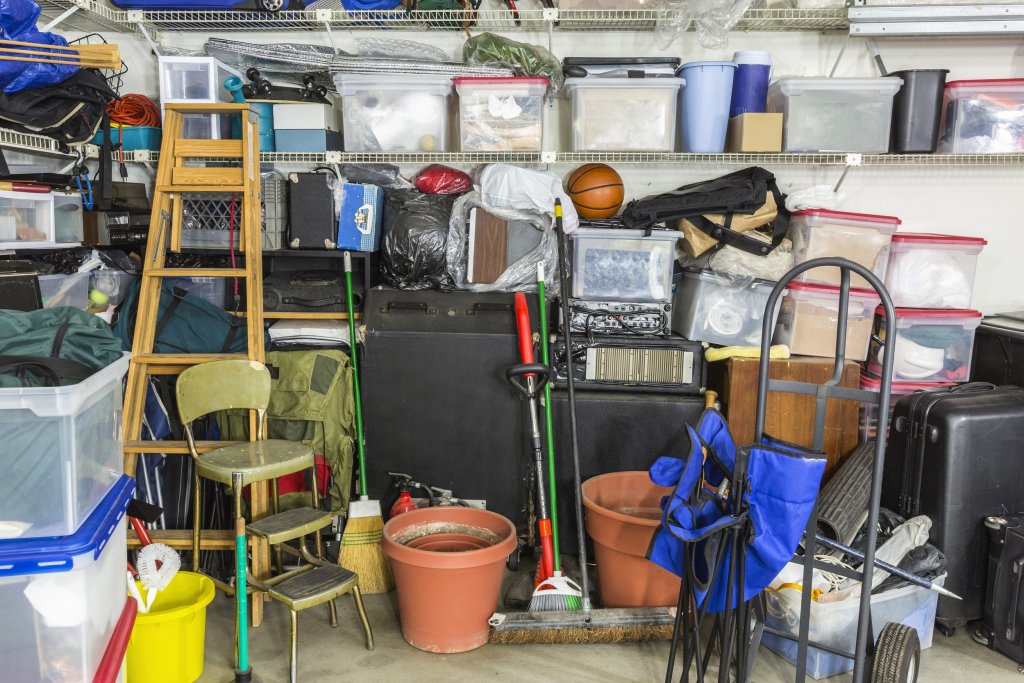
Stacked boxes of decorations, storage, or would-be donations can contribute to clutter, even in spaces you don’t use often, such as garages, attics, or basements. While these spaces might be out of sight and out of mind, it’s essential to keep them clear.
Rodents, insects, and other pests are drawn to clutter because it gives them places to hide and nest. To prevent pests, keep these spaces clean by applying reverse decluttering techniques to each room.
Remember to set those hard limits for yourself on how long to keep stored items to prevent buildup.
Apply this approach in each room of your home. You can also apply reverse decluttering to your wardrobe by ruthlessly decluttering clothing and keeping only pieces that you wear often and feel comfortable in.
Try to limit “just in case” and “someday” items, or consider other ways to reuse damaged clothing by transforming them into dish rags or tablecloths. If you’re hesitant to part with older clothes that have sentimental value but no longer fit, such as childhood camp shirts or uniforms, try stitching them into a blanket.

4. Think One In, One Out
To set yourself up for long-term success, you can apply the “one in, one out” rule. You’ll naturally continue accumulating things as time passes, so to keep clutter from accumulating, let go of an item for every new one you get.
This mindset is particularly useful and intuitive when replacing broken items, as you can simply toss the old one to make room. However, it can be more challenging for certain things, like gifts.
To apply this principle and promote mindful consumption for yourself and those around you, consider asking for consumable gifts or new versions of everyday items, allowing you to sell or donate the older versions that no longer serve their purpose.
Actively practicing this method can keep clutter under control in the long run. It also helps reinforce the value of the items you already have, making the principles of reverse decluttering stick.
Benefits of a Simpler Space for a Happier Home
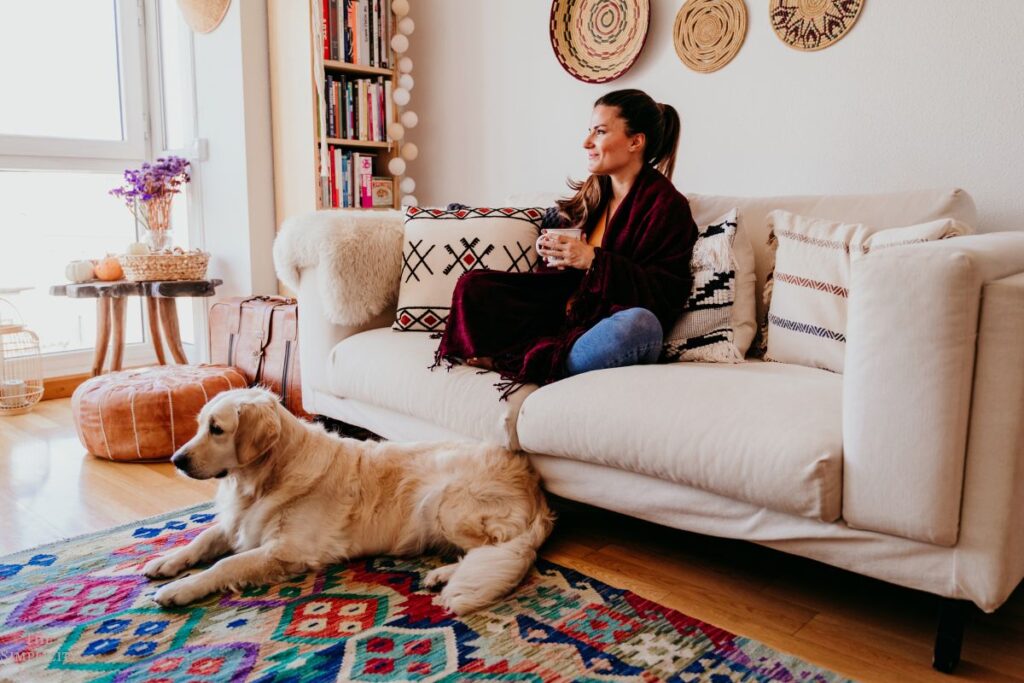
Even for people who prefer maximalism, decluttering is an important part of maintaining a happy and healthy home. Studies note that 55% of Americans consider clutter a major source of stress.
Conversely, cleaning and decluttering are linked to increased focus and lower cortisol levels, as well as lower risks of asthma and allergies.
For busy families, decluttering may feel like a massive undertaking. Traditional downsizing, which focuses on discarding things, may be challenging for anyone with especially cherished items or those attached to particular memories.
Using the reverse decluttering method allows you to focus on keeping what’s important, which helps break decluttering up into manageable tasks that the whole family can participate in.
Overcoming Obstacles With the Reverse Decluttering Method
A common pitfall of prioritizing sentimental items is assigning value to everything, leaving you with nothing to discard. It can be challenging to overcome feelings of guilt, especially when it comes to childhood objects and gifts.
Consider these actionable tips to help break the cycle of sentimentality.
1. Prioritize the Memory Over the Object
Some items attached to a strong memory may no longer serve an essential purpose in your home, like a childhood drawing or a movie ticket.
It’s okay to let go of the physical item if you still cherish the memory attached to it. Consider taking a picture or writing down the memory to help hold on to it.
2. Put a Price on “Just In Case” Items
Sometimes, holding on to things you think you might need in an unprecedented or unlikely situation just leads to clutter and even increased stress in anticipation.
Consider the estimated cost of these items and apply the 20/20 rule — if you can replace a “just in case” item for under $20 in under 20 minutes, then it is likely safe to discard. Be forwarned though, the $20 rule can encourage you to declutter too much, so use it with caution.

3. Regift or Repurpose Valuable Gifts
What should one do with unwanted gifts? Gifts are often the hardest to let go of, mainly due to feelings of guilt. However, if an item is not serving you, it might just be taking up space.
Consider regifting it to someone you know will appreciate it. You can also repurpose the item elsewhere in your home, such as using a coffee mug as a pencil holder or repurposing a decorative bowl as a succulent planter.
Start Fresh With Less
Decluttering is an essential way to keep your home feeling clean and relaxing. Where traditional decluttering methods may take a substantial emotional toll, reverse decluttering helps you reprioritize what holds the most meaning for you.
By focusing on what you’re choosing to keep, the entire process becomes a joyful act of curation.

Evelyn Long is a home organization writer who helps homeowners and renters maintain a neat space through innovative decluttering tips. She has written for several other publications, including the National Association of Realtors and DecorMatters. She is also the editor-in-chief of Renovated Magazine, where she shares additional tips on decluttering and home organization.
What do you think of the reverse decluttering method? Let us know in the comments section below.
Sign up on the form below to get weekly decluttering tips and inspiration sent straight to your inbox. You’ll also get the free 5 Areas to Declutter in 10 Minutes Checklist to help you get started decluttering today.